
The Rise of #MomInasal: How modern Filipino moms make every meal feel like home
Posted on 08 May 2026
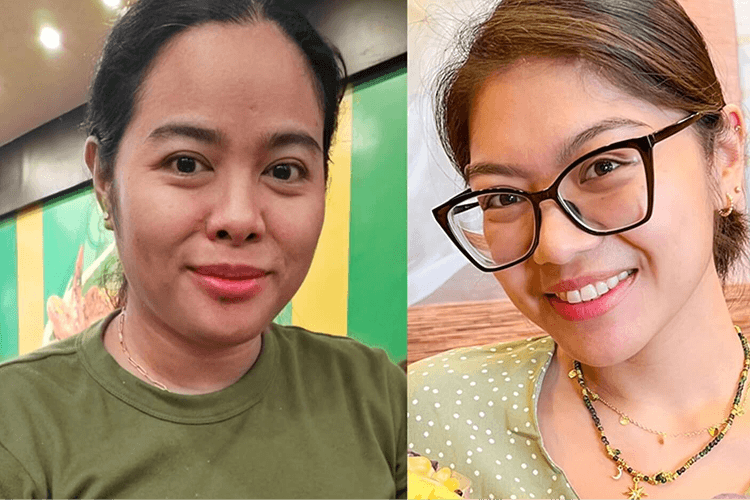
For generations, Filipino mothers have been the heart of the home kitchen—masters of lutong-bahay, turning simple ingredients into meals filled with comfort, care, and connection. The aroma of adobo simmering or sinigang bubbling on the stove has long been a symbol of love you can taste.
But today, that picture is evolving.
In between deadlines, school runs, errands, and everything else that’s fighting for their attention, modern Filipino moms are navigating a different kind of reality—one where time and energy are just as precious as the meals they hope to prepare. And while lutong-bahay remains close to the heart, there are days when cooking simply isn’t possible.
“On my busiest days, dinner becomes a question of what I can put on the table the fastest. I still want it to feel special, but sometimes, I just don’t have the time or energy to cook for my three kids,” said Ning Llorin, a school nurse and a mom to three kids.
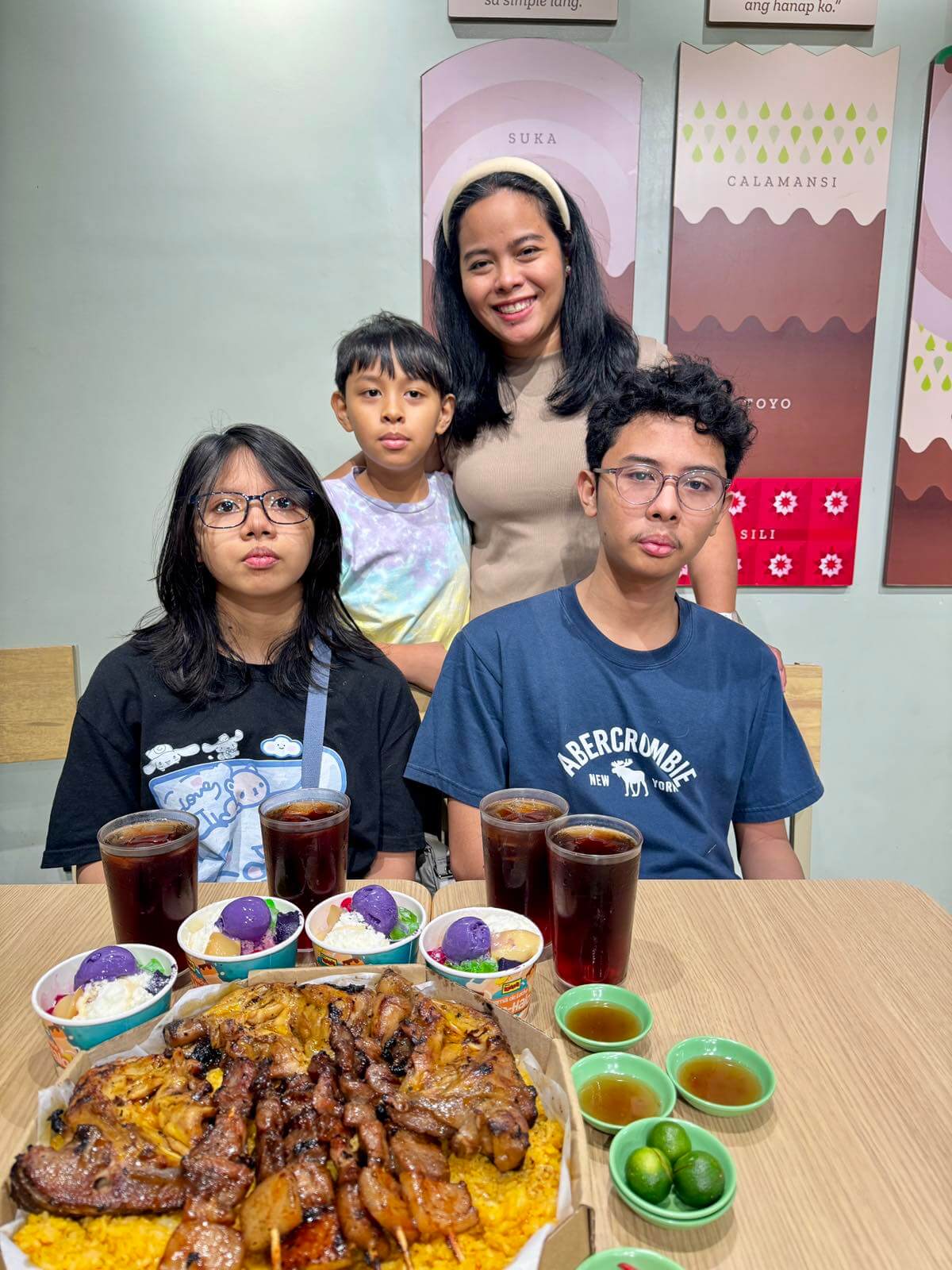
Ning Llorin and her kids
It’s in these moments that a new kind of care emerges—not as a replacement for home-cooked meals, but as an extension of it.
In many households, go-to favorites like Mang Inasal have become part of the mix, especially on days when cooking isn’t an option. With its familiar Ihaw-Sarap flavors and Unli-Saya experience, it brings a kind of comfort families already know and look forward to.
“Mang Inasal has always been about bringing people together over food that feels familiar and satisfying,” shares Mike V. Castro, President of Mang Inasal. “We understand that today’s moms juggle so many responsibilities, and we’re honored to be their partner in making sure their families still enjoy warm, hearty meals—even on the busiest days.”
And for many moms, the reaction says it all.
“When I order Mang Inasal, the faces of my sons Trey and Troy light up,” Mayen del Mundo-Comia shares. “It’s like I gave them a treat. But for me, it’s also a relief because I know they’ll eat well and we still get to enjoy the meal together.”
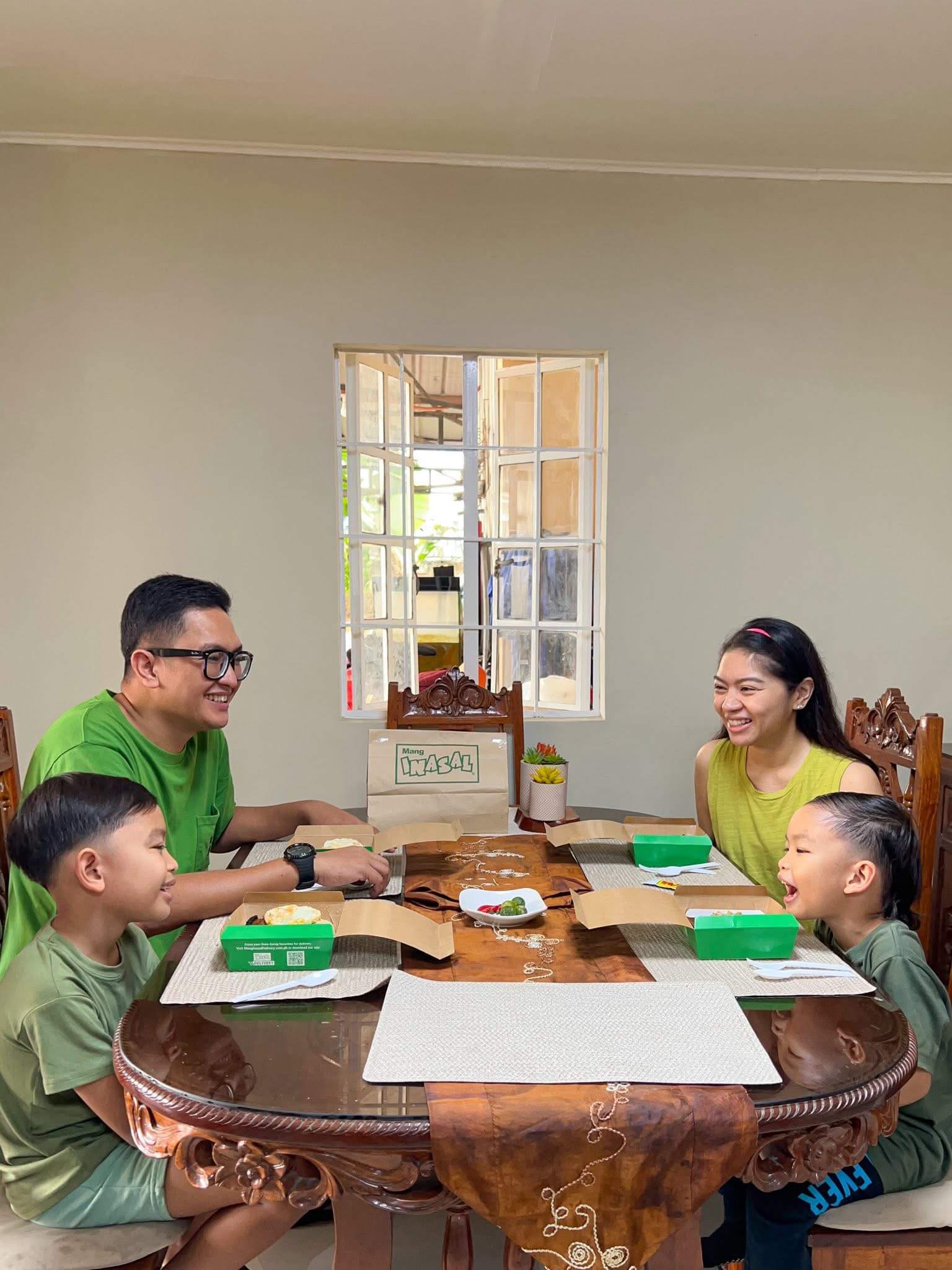
Mayen Comia with her husband and sons.
That joy, that shared moment around the table, is what truly matters.
Of course, the shift doesn’t come without its own emotional weight. Some moms admit to feeling a quiet sense of guilt on days they can’t cook. After all, for so long, preparing meals has been closely tied to how care is expressed at home.
“You do feel it sometimes,” mommy Alexenda Macuja admits. “Parang kulang. But I’ve learned that taking care of my family isn’t just about cooking every meal. It’s about making sure they’re happy, full, and that we still spend time together.”
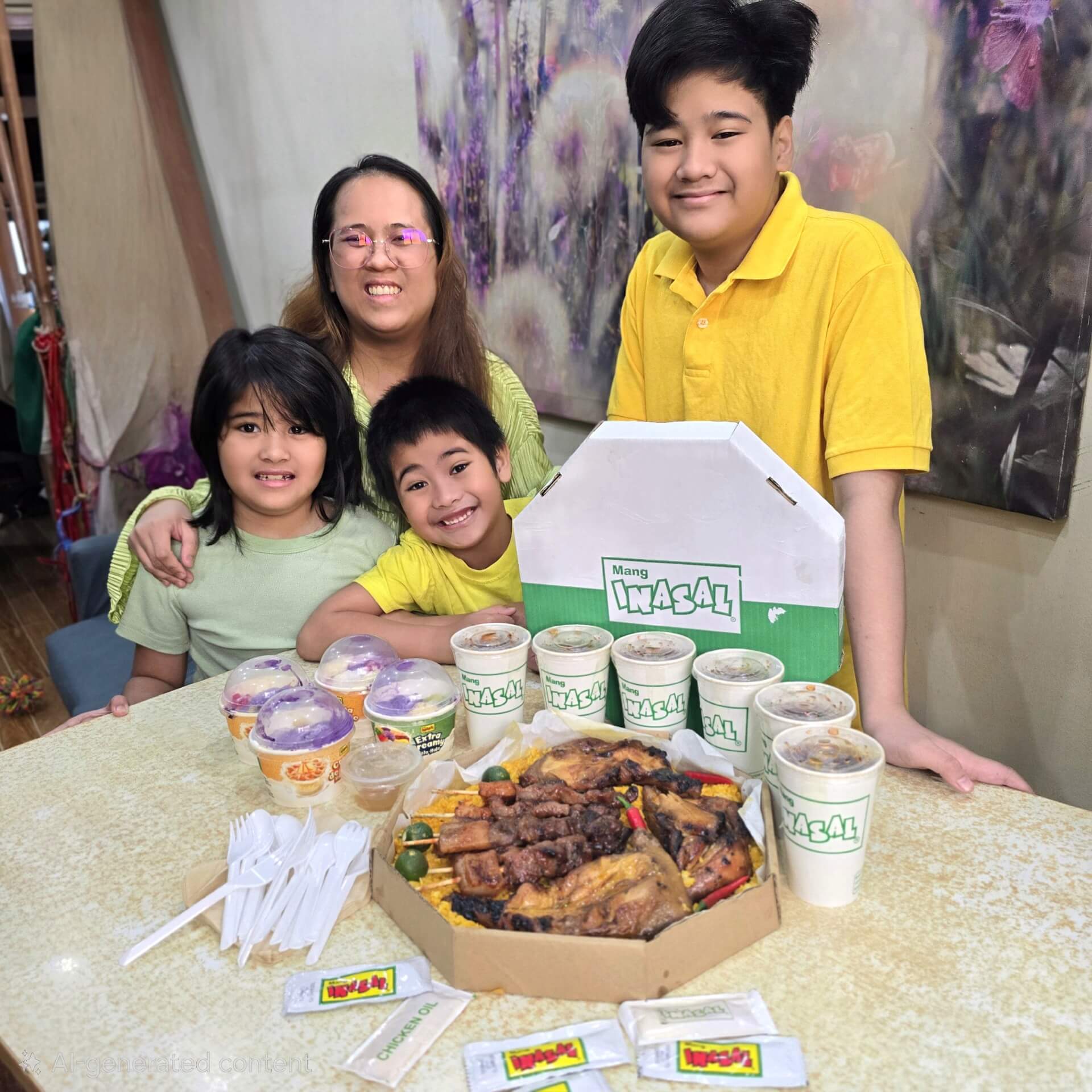
Alexenda Macuja and her children
And perhaps that’s where the definition of motherhood is gently but powerfully being rewritten.
Today’s Filipino mom looks different—and in many ways, that’s where we see the rise of the #MomInasal. She’s not defined solely by what she cooks, but by how she shows up, day in and day out. Whether it’s a home-cooked favorite or a thoughtfully chosen pasalubong, what remains constant is her intention: to nourish, to comfort, and to connect.
Because in the end, what makes a meal feel like home isn’t just where it comes from. It’s the love and the Unli-Saya that a #MomInasal brings with it.


